A roadmap that tells the truth
Each roadmap plan shows the real dates of the releases that deliver it, so a slipping sprint shows on the roadmap the same day, not at the next steering meeting.
Product Planning and delivery
Roadmap, releases, sprints and client projects in one connected plan, so every date you show comes from the work itself, not from someone's update.
What you get
Each roadmap plan shows the real dates of the releases that deliver it, so a slipping sprint shows on the roadmap the same day, not at the next steering meeting.
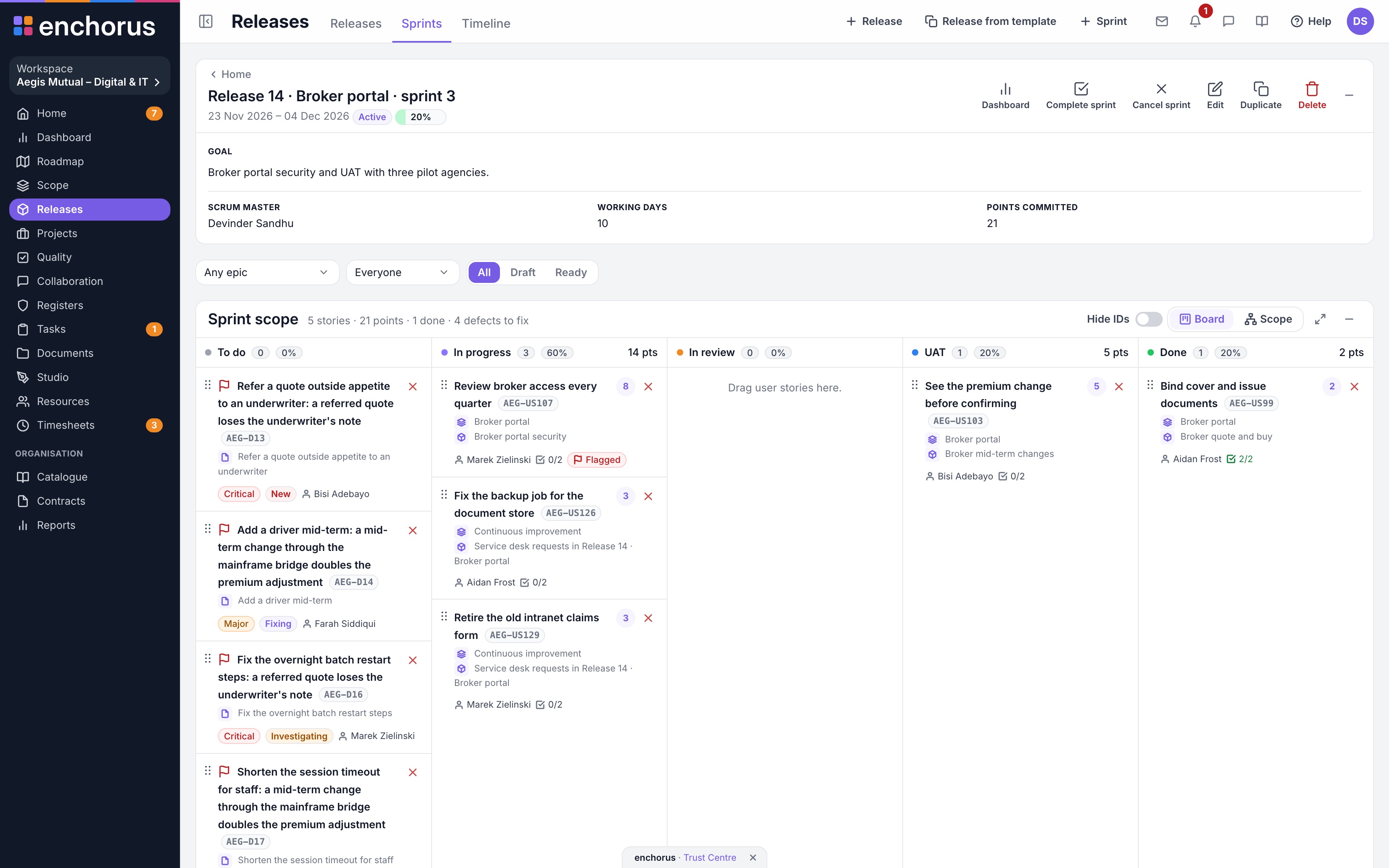
Releases made of sprints, each with its scope, board and burndown, and one timeline of every release, sprint and task, so everyone sees a slipping release the day it slips.
Sprints and boards for software, projects with sections, tasks and milestones for client and business work, sharing one set of people, holidays and timesheets.
Epics, features and user stories drafted with AI from your requirement documents or a chat and reviewed before they count, then delivered by sprints or projects and accepted as done against the Definition of Done.
Save the plan as agreed as a baseline that is never edited, and show the variance in days, hours and cost whenever someone asks.
Milestones show as missed the day they pass, dependencies turn red when a plan runs late, and tasks wait for the tasks they depend on.
How it holds together
Traced end to end
A roadmap plan links to its releases, a release to its sprints, a sprint to the user stories it delivers, and each story to its feature and epic. Ask why any piece of work exists, or what a late story puts at risk, and the answer is one click away.
One record
A story takes its priority from its epic and its planned release from its feature, and hours booked to its tasks update what is left. Nobody keeps a second spreadsheet to make the plan add up.
The process, built in
A Definition of Ready and a Definition of Done for each workspace, and every release, sprint and project rated green, amber or red on the same five checks, each with its reason.
Yes, agile and waterfall side by side. Sprints, backlogs and boards serve agile teams, while client projects with sections, tasks, milestones and a timeline serve stage-based work. Both live in the same workspace and share people, holidays and timesheets.
Each roadmap plan links to releases, and its actual dates are worked out from those releases and their sprints. Your planned dates stay visible as the target, so the gap between ambition and delivery is always clear.
Yes. Import epics, features and user stories from a CSV file, or have AI draft them from your requirement documents or in a chat, for a planner to review before anything is added. Then order them in the feature map and commit them to sprints from the backlog.
Yes. One timeline shows every release with its sprints and tasks on one chart, at the zoom you choose, with each release's planned date marked.
Yes. A task can wait on others, and in a client project the board has a Waiting column for work held up by someone else, such as the client.
Start a free trial in a minute, or book a demo and we will show you enchorus with your own projects.
14-day free trial · 3 users included · no card needed
Guides on planning, delivery and running a project office, what's new in enchorus, and offers for subscribers. Once in a while, never noise.