Room for ideas
Studio boards for brainstorming, SWOT, impact and root cause, shared with the people you choose.
Who it's for E-commerce and web studios
Scope agreed against a statement of work, every change priced and decided on record, and clients following progress themselves, so the conversation is about the contract, not about memory.
See enchorus with your own projects, talk through onboarding, or ask us anything, with the people who build it.
What you need
Studio boards for brainstorming, SWOT, impact and root cause, shared with the people you choose.
Conversations sit on the feature, story or defect they are about, so design feedback is found with the work.
Sprints and boards with your own stages, and a board of every task: To do, Doing, Waiting and Done.
Readers are free, so clients follow progress and review it without a paid seat.
The client's testers check each story with the Tester permission before launch.
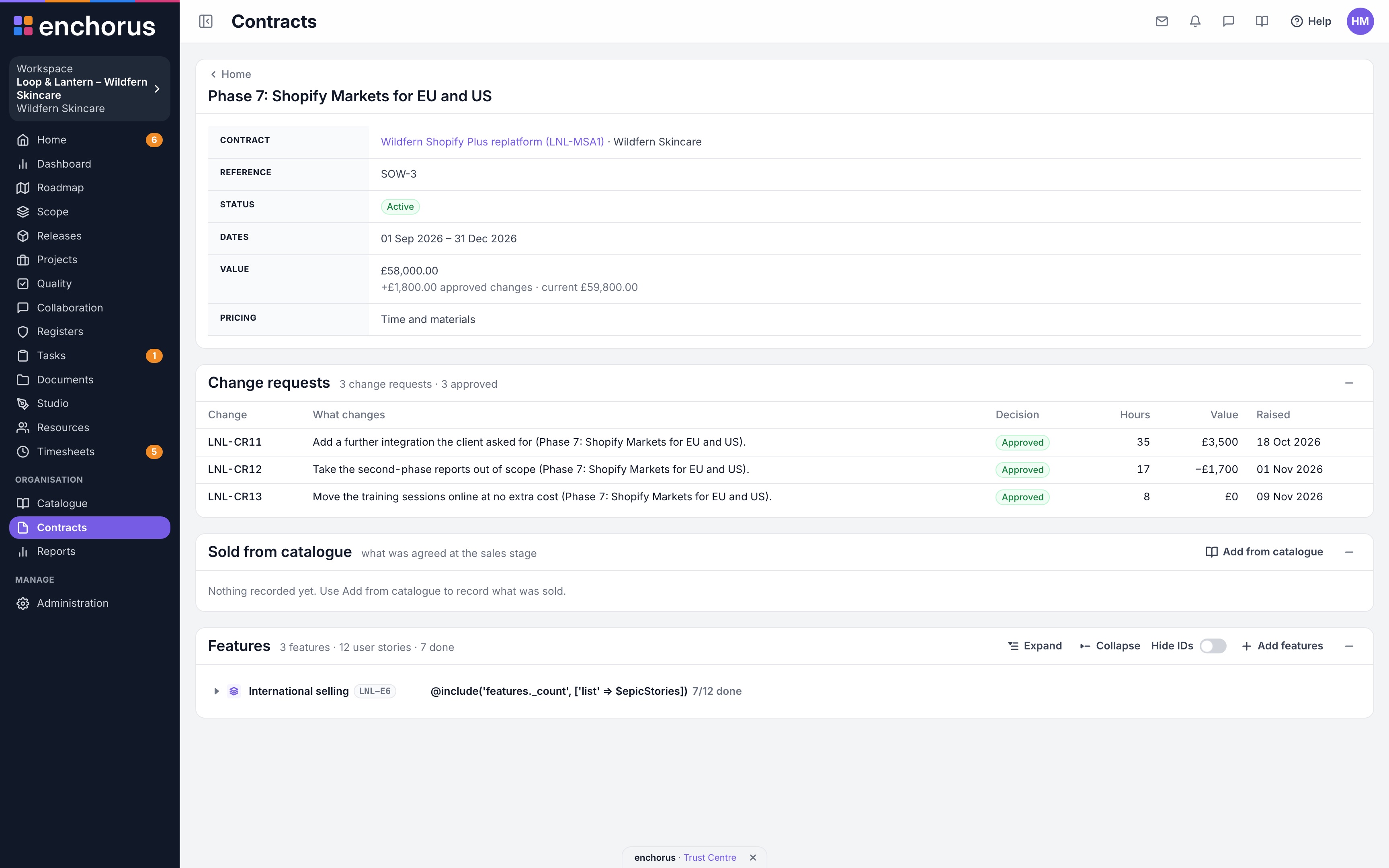
Each feature is linked to the statement of work that pays for it, and changes are decided on record.
E-commerce and web studios
Each feature is linked to the statement of work that pays for it, so both sides see what is in scope.
Each change is discussed on the feature or story it affects, decided in the change register and logged against the statement of work.
Statement of work consumption shows how much of each one is used, and margin by client and project shows which builds are eating hours.
Readers are free, so the client follows progress themselves, and their testers check each story with the Tester extra permission before launch.
How it runs
The team brainstorms on Studio boards, and the ideas worth doing go into scope.
Features and user stories are agreed against the statement of work.
Design feedback is given in conversations on each feature or story.
Stories move across the board in sprints, and the client follows as a free Reader.
New requests are discussed on the work they affect and decided in the change register.
The client's testers check each story, and defects are fixed before launch.
Defects and new requests come into the same backlog, with the history of every decision.
How it holds together
One record
Scope, change requests, conversations, tests and progress sit in the client's workspace, so both sides look at the same thing.
Traced end to end
The contract holds its statements of work, each the features it pays for and the change requests agreed against it, and each feature its stories, tests and the conversation that changed it. What was agreed is never a matter of memory.
The process, built in
A change is raised on the item, priced, decided on record and counted against the statement of work before work starts.
Every feature is linked to the statement of work that pays for it, so both sides can see what was agreed, and change requests are discussed on the item they affect.
No. Readers are free and read-only.
Yes. A client workspace can use the backlog, sprints and boards as well as client projects with tasks and a timeline.
Yes. Each change request records its value and estimated hours against the statement of work it changes, and once approved it is added to that statement's current value.
Yes. Give the client's testers the Tester extra permission: they record test results and raise defects, while their role otherwise stays read-only.
Start a free trial in a minute, or book a demo and we will show you enchorus with your own projects.
14-day free trial · 3 users included · no card needed
Guides on planning, delivery and running a project office, what's new in enchorus, and offers for subscribers. Once in a while, never noise.